Sunday, 30 October 2011

Week 12 - Project Management

1 Explain the triple constraint and its importance in project management.

The triple constraint involves making tradeoffs between scope, time and cost for a project.  It is inevitable in a project life cycle that there will be changes to the scope, time or cost of the project.
It is key for members of an organisation who desire to make meaningful contributions to understand the company's investment and selection strategy for projects and how it determines and prioritises the project pipeline.


2 Describe the two primary diagrams most frequently used in project planning

Two primary diagrams used in project planning include PERT and Gantt charts

PERT chart – a graphical network model that depicts a project’s tasks and the relationships between those tasks.  PERT charts frequently display a project's critical path.(Dependencies and Critical paths are found in PERT charts)
  • A dependency is a logical relationship that exists between the project tasks, or between a project task and a milestone.
  • The critical path (often indated in red) is a path from the start to the finish that passes through all the tasks that are critical to completing the project in the shortest amount of time.

Gantt chart – a simple bar chart that depicts project tasks against a calendar, In a Gantt chart, tasks are listed vertically and the project's time frame is listed horizontally. A Gantt chart works well for representing the project schedule. It also shows actual progress of tasks against the planned duration.


3 Identify the three primary areas a project manager must focus on managing to ensure success

The three primary areas for a project manager to focus on are:
  • People - managing people is one of the hardest and most vritical tasks a project manager undertakes. Resovling conflicts within the team and balancing the needs of the project with the personal and professional needs of the team are two of the challenges facing project managers.
  • Communications - While many compainies develop unique project menagement frameworks based on familiar project management standards, or adopt specific methodologies such as PRINCE, all of theam agree that communication is the key to excellent project management.
  • change - whether it comes in the form of a crisis, a market shift or a technological development, is chanllenging for all organisations. Successful organisations and successful people learn to anticipate and react appropriately to change.
4 Outline 2 reasons why projects fail and two reasons why projects suceed.
One of the reasons for projects to fail is long timescales for a project have led to systems being delivered for products and services no longer in use by an organisation. The key recommendation is that project timescales should be short, which means that larger systems should be split into separate projects. There are always problems with this approach, but the benefits of doing so are considerable. The other reason is Many projects have high level, vague, and generally unhelpful requirements. This has led to cases where the developers, having no input from the users, build what they believe is needed, without having any real knowledge of the business. Inevitably when the system is delivered business users say it does not do what they need it to. The reasons for projects to suceed are to have them done SMART (specific, measurable, agreed upon, realistic and time framed)
Truth about Project Failures


Textbook: Baltzan, Phillips, Lynch & Blakey, Business Driven Information Systems, 1st Australian/New Zealand ed, pp.519, Figure 11.4, pp. 525, Figure 11.8 and Figure 11.9 pp.526

Wednesday, 12 October 2011

Week 10 Customer Relationship Management & Business Intelligence

1 What is your understanding of CRM?

Customer relationship management (CRM) 
It involves managing all aspects of a customer’s relationship with an organisation to increase customer loyalty and retention and an organisation's profitability.
CRM helps companies make the their interactions with customers seem friendlier through individualisation
CRM is not just a technology, but a strategy that an organisation must embrace on an enterprise-wide level. Although CRM has many technical components, it is actually a process and business goal simply enhanced by technology. Organisations must first decide that they want to build strong customer relationships and then they determine how IT can support their goals.


 2 Compare operational and analytical customer relationship management
                                                                                   
Operational Customer relationship management focuses on organising and simplifying the management of customer information. It uses a database to provide consistent information about a company’s interaction with a customer.
 Analytical Customer relationship management uses data mining to provide strategic data about customers. Data mining uses various modelling and analysis techniques to find patterns and relationships to make accurate predictions.
3 Describe and differentiate the CRM technologies used by marketing departments and sales departments

4 How could a sales department use operational CRM technologies?

A sales department can use operational CRM technologies to increase customer satisfaction, such as:
sales management CRM systems automate each phase of the sales process, helping individual sales representatives co-ordiate nd orgnise all of their accounts. Features include calendars to help plan customer meetings, alarm reminer signalling important tasks, customisableultimedia presentations and document generation. These systems can even provide an analysis of th sales cycle and calculate how each individual sales representative is performing during the sales process.
A contact management CRM system maintains customer contact information and identifies prospective customers for future sales. Contact management systems include such features as maintaining orgnisationl charts, detailed customer otes nd supplemental sale information.

Opportunity management CRM systems target sales opportunities by finding new customers orcompanies forfuture sales. Opportunity management systems determine potential customers and competitors and define selling efforts, including budgets d schedules. The primary difference between contact management and opprtunity management is that contact management deals with existing customers and opportunity management deals with new customers.


5 Describe business intelligence and its value to businesses
 
Business intelligence (BI) – applications and technologies used to gather, provide access to, and analyse data and information to support decision-making efforts.
Many Businesses are finding that they must identify and meet the fast-changing needs and wants of different customer segments in order to stay competitive in today’s consumer-centric market. BI can tell companies things like;
  Determine who are the best and worst customers thereby gaining insight into where it needs to concentrate more for its future sales
  Identify exceptional sales people
  Determine whether or not campaigns have been successful
  Determine in which activity they are making or losing money.
Business Intelligence Demonstration

Operational Values of BI
The key is to shorten the latencies so that the time frame for opportunistic influences on customers, suppliers, and others is faster, more interactive, and better positioned.


6 Explain the problem associated with business intelligence. Describe the solution to this business problem
The solution is to implement business intelligence systems and tools allows business users to received data for analysis.
In every organisation, employees make hundres of decisions each day. They can range from whether to give a customer a discount to wheither to start producing a part, launch another direct-mail campaign, order additional materials and so on. These decisions are sometimes based on facts, but mostly based on experience, acumulated knowledge and rule of thumb. The problem is that it takes years to develop experience and knowledge and those who do may still fall prey to decision traps ro biases in judgment. Improving the quality of business decisions has a direct impact on costs and revenue.


7 What are two possible outcomes a company could get from using data mining?

The two possible outcomes are: cluster analysis and statistical analysis


Cluster analysis – a technique used to divide an information set into mutually exclusive groups such that the members of each group are as close together as possible to one another and the different groups are as far apart as possible.

Statistical analysis – performs such functions as information correlations, distributions, calculations, and variance analysis.
 
·           Forecast – predictions made on the basis of time-series information
·         Time-series information – time-stamped information collected at a particular frequency


Textbook: Baltzan, Phillips, Lynch & Blakey, Business Driven Information Systems, 1st Australian/New Zealand ed,
pp. 407, 408, 419, Figure 9.8 pp.421, Figure 9.8 pp.425, pp.426  Figure 9.7 pp. 422

Saturday, 8 October 2011

Week 9 - Operations Management and Supply Chain

1. Define the term operations management

Copyright © 2010 McGraw-Hill Australia Pty Ltd
Baltzan, Philips, Lynch & Blakey, Business Driven Information Systems (Australian/New Zealand edition)


Operations management (OM) is the management of systems or processes that convert or transform resources (including human resources) into goods and services. It is also responsible for managing the core processes used to manufacture good and produce services.

2. Explain operations management’s role in business

The scope of OM ranges across the organisation and includes many interrelated activities, such as forecasting, capacity planning, scheduling, managing inventories, assuring quality, motivating employees, deciding where to locate facilities and more. 
In the example of Airline business, it's role involves:

  • Forecasting
  • Capacity Planning
  • Scheduling 
  • Managing Inventory
  • Assuring Quality
  • Motivating and training employees
  • Locating facilities
3.Describe the correlation between operations management and information technolog

Today many organisations operate in terms of Strategic Business Units (SBUs). Decisions at SBU level focus on being effective. Information technology can enhance the requirement of effectiveness with the systems specially designed for them. Such as Materials requirement planning (MRP) systems, Global inventory management systems, Operational planning and control (OP&C) and Inventory management and control systems

 
Materials requirement planning (MRP) systems use sales forecasts to make sure that needed parts and materials are available at the right time and place in a specific company. 
Global inventory management systems provide the ability to locate, track and predict the movement of every component or piece of material anywhere upstream or downstream in the production process. This allows an organisation to locate and analyse its inventory anywhere in its production process.
Operational planning and control (OP&C) deals with the day-to-day procedures for performing work, including scheduling, inventory and process management. 
Inventory management and control systems provide control and visibility to the status of individual itmes maintained in inventory. The software maintains inventory record accuracy, generates material requirements for all purchased items and analyses inventory performance. 


4. Explain supply chain management and its role in a business

The supply chain is a business process that links all the procurement from suppliers, the transformation activities in side a firm (the value chain) and the distribution of goods or services to customers via wholesalers and retailers.
A supply chain is a network of organizations and facilities that transforms raw materials into products delivered to customers.
Supply Chain Management (SCM) – involves the management of information flows between and among stages in a supply chain to maximise total supply chain effectiveness and profitability

5. List and describe the five components of a typical supply chain
Copyright © 2010 McGraw-Hill Australia Pty Ltd


Baltzan, Philips, Lynch & Blakey, Business Driven Information Systems (Australian/New Zealand edition

plan
This is the strategic portion of supply chain management. A company must have a plan for managing all the resources that go toward meeting customer demand for products or services. A big piece of planning is developing a set of metrics to monitor the supply chain so that it is efficient, costs less, and delivers high quality and value to customers.
source
companies must carefully choose reliable suppliers that will deliever goods and services required for making products. Companies must also develop a set of pricing, delivery, and payment processes witth supplier and create mmetrics for monitoring and improving the relationships.
make
This is thhe step where companies manufacture their products or services. This can include scheduling the activities necessary fro production, testing, packaging, and preparing for delivery this is by far the most metric-intensive portion of the supply chain, measuring quality levels, production output and worker produtivity.
deliver
This step is commonly referred to as logistics. Logistics is the set of processes that plans for and controls the efficient and effective transportation and storage of supplies from suppliers to customers During this step, compaies must be abe to receive order from customers, fulfil the orders via a network of warehouses,, pick transportation companies to deiever the products, and implement a billing and invoicing system to facilitate payments.
return
This is typically the ost problematic step in the supply chain. Companies ust create a network forreceiving defective and ecess products and support customers who have problems with delievered products.


6. Define the relationship between information technology and the supply chain.


The relationship between information technology and supply chain
With the modern advances in technology, it has enhanced the five SRM components significantly by improving companies’ forecasting and business operations. These integrated systems have provided companies with greater visibility over the supply chain inventory levels.
Information technology’s primary role is to create integrations or tight process and information linkages between functions within an organization.

Operations Management


Reference:
Cosmo Strategic Business Unit, COSMO BUSINESS SYSTEM AEBE, available on http://www.cbs.gr/Company/StrategicBusinessUnits%CF%84%CE%B7%CF%82Cosmos/tabid/398/language/en-US/Default.aspx accessed on 9th Oct 2011
Textbook: Baltzan, Phillips, Lynch & Blakey, Business Driven Information Systems, 1st Australian/New Zealand ed, pp.353, 355, 365, 367, Figure 8.3 p363 and  Figure 8.10 pp. 368

Monday, 3 October 2011

Week 8 - Databases and DataWarehouse


1. List, describe, and provide an example of each of the five characteristics of high quality information.


Accuracy
Are all the values correct? For example, is the name spelled correctly? Is the dollar amount recorded properly?
Completeness
Are any of the values missing? For example, is the address complete including street, city, state and postcode?
Consistency
Is aggregate or summary information in agreement in detailed information? For example, do all total fields equal the true total of the individual fields?
Uniqueness 
Is each transaction, entity and event represented only once in the information? For example, are there any duplicate customers?
Timeliness
Is the information current with respect to the business requirements? For example, is information updated weekly, daily, or hourly?


2. Define the relationship between a database and a database management system.
A database maintains information about various types of objects. In business, organisational information is stored in a database.
Applications and programs, such as supply chain management systems and customer relationship management systems, access the data in the databases the program can consult it to answer queries. The records retrieved in answer to questions become information that can be used to make decisions. The computer program used to manage and query a database is known as a database management system (DBMS). The properties and design of database systems are included in the study of information science.

                      An Introduction to Relational Databases


3. Describe the advantages an organisation can gain by using a database.
The advantages an organisation can gain from using a database include:

  • Increased flexibility - database tend to mirror business structures and a good database can handle changes quickly and easily. It also provides flexibility i allowing each user to access the information in whatever way best suits the company's requirement.
  • Increase scalability and performance - Only a database could 'scale' to handle the massive volumes of information and the large numbers of users required for the successful business. Scalability refers to how well a system can adapt to increased demands. Performance measures how quickly a system performs a certain process or transaction.
  • Reduced information redundancy - Eliminating the duplication of information an organisation helps to save space, makes performing information updates easier and improves information quality.
  • Increased information integrity (quality) - The specification and enforcement of integrity constraints produce higher quality information that will provide better support  for business decision. It helps to reduce the information error rates and increase the use of organisational information.
  • Increased information security - As systems become increasingly complex and more available over the internet, security has become an even bigger issue. Databases offer many security features including passwords, access levels, and access controls. Various security features of databases can ensure that individuals have only certain types of access to certain types of information.


4. Define the fundamental concepts of the relational database model.
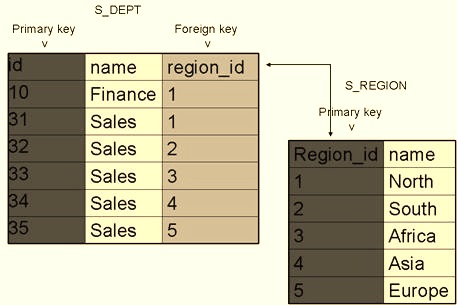
The primary concepts of the relational database model are entities, entity classes, attributes, keys and relationships. 

  • an entity - in the relational database model is a person, place, thing, transaction or even about which information is stored.
  • an entity class - is the collection of similar entities.
  • attributes - also called fields or columns, are characteristics or properties of an entity class.
  • keys - include a primary and a foreign key, primary key is field (or groups of field) that uniquely identifies a given entity in a table. A foreign key is a primary key of one table that appears as an attribute in another table and acts to provide a logical relationship between two tables.
5. Describe the benefits of a data-driven website.
There are many advantages which are list and explained below:
Development
Allows the website owner to make changes any time without having to rely on a developer or knowing HTML programming. A well-structured, data-driven website enables updating with little or no training.
Content management
A static website requires a programmer to make updates. This adds an unnecessary layer between the business and its web content, which can lead to misunderstandings and slow turnarounds for desired changes.
Future expandability
Having a data-driven website enables the site to grow faster than would be possible with a static site. Changing the layout , displays and functionality of the site (adding more features and sections) is easier with a data-driven solution.
Minimising human error
Even the most competent programmer charged with the task of maintaining many pages will overlook things and make mistakes. This will lead to bugs and inconsistencies that can be time consuming and expensive to track down and fix. A well-designed, data-driven website will have 'error-trapping' mechanisms to ensure that required information is filled out correctly and that content is entered and displayed in its correct format.
Cutting production and update costs
A data-driven website can be updated and ' published' by any competent data-entry or administrative person. In addition to being convenient and more affordable, changes and updates will take a fraction of the time that they would with a static site.
More efficient
With a data-driven solution, the system keepers track of the templates, so users do not have to. Global changes to layout, navigation or site structure would need to be programmed only once, in one place, and the site itself will take care of propagating those changes to the appropriate pages and areas. A data-driven infrastructure will improve the reliability and stability of a website, while greatly reducing the chance of ' breaking' some part of the site when adding new areas.
Improved stability
Any programmer who has to update a website from 'static' templates must be very organised to keep track of all the source files. If a programmer leaves unexpectedly, it could involve recreating existing work if those source files cannot be found. Plus, if there were any changes to the templates, the new programmer must be careful to use only the latest version. With a data-driven website, there is peace of mind, knowing the content is never lost-even if your programmer is.


6. Describe the roles and purposes of data warehouses and data marts in an organisation

Data warehouse – a logical collection of information, gathered from many different operational databases, that supports business analysis activities and decision-making tasks.
The primary purpose of a data warehouse is to aggregate information throughout an organisation into a single repository for decision-making purposes
A data mart - contains a subset of data warehouse information. 
To distinguish between data warehouses and data marts, think of data warehouses as having a more organisational focus and data marts having focused information subsets particular to the needs of a given business unit such as finance or production and operations.


Textbook: Baltzan, Phillips, Lynch & Blakey, Business Driven Information Systems, 1st Australian/New Zealand ed, chapter 6

Tuesday, 23 August 2011

Week 7 - Networks & Wireless


1. Explain the business benefits of using wireless technology.


Undeterred connectivity, anytime, anywhere, has fueled a major market and technology disruption, which has permeated almost every consumer market worldwide. The domino effect of the success of wireless technology has resulted in a unique opportunity for innovation and creativity in technology, marketing, and business strategy


There are many advantages that a business can benefit from using wireless technology, such as below:


  • It's much easier to access. You can use it any where without having to rewire or change any settings. It also means in running a business, it provides the utmost mobility for your business so that it can be operated and coordinated from anywhere, any time. 
  • It's much tidier. It dramatically reduces the space all the different cables required with wired technology. It also makes the work place or shop front more presentable.
  • One of the main advantages of a wireless network is that you can add another computer (up to the maximum number on a hub or router) more easily than on a wired network. This reduces the cost of upgrading or adding to your computers if you use an external company to setup or maintain it. 


2. Describe the business benefits associated with VoIP


VOIP (Voice over IP) enables phone calls, faxes, digital voice mail, e-mail and Web conferences over networks.


It helps businesses to save money in three ways:


  • VOIP runs over the existing computer network.
  • Calls over the internet do not attract telecommunications charges.
  • Customers can port their numbers between cariers. 


3. Compare LANs and WANs


Local area networks (LANs) 


Connect cers that reside in a single geographic location on the premises of the company that operates the LAN.


Wide area networks (WANs)


Connect computers at different geographic sites.


4. Describe RFID and how it can be used to help make a supply chain more effective.

Radio Frequency Identification (RFID)

RFID technology use active or passive tags in the form of chips or smart labels that can store unique identifiers and relay this information to electronic readers. When a RFID tag, which is smaller than a grain, is placed on an item, it automatically radios its location to RFID readers on shop shelves, checkout counter, loading-bay doors and shopping carts. With RFID tags, inventory is taken automatically and continuously. RFID tags can cut costs by requiring fewer workers for scanning items; they also can provide more current and more accurate information to the entire supply chain. 

The advent of RFID has allowed everyone from shipping companies to hospitals to reduce costs and overheads by making more transparent inefficient business processes. 

RFID Wal Mart Standards - RFID Supply Chain Lab


5. What is one new emerging technologythat could change a specific industry?


With RFID becoming bother smarter and smaller, the possibilities for its uses are endless. One of the benefit of this new emerging technology is to identify human remains.
Hurricane Katrina in the US left behind many unclaimed casualties, despite the tireless searches by countless people. Thanks to the VeriChip, RFID tags are now being used to locate bodies in an effort to reunite loved ones. This helps to identify cadavers during transport and coroners are now able to collect body parts for burial in their rightful places.


Textbook: Baltzan, Phillips, Lynch & Blakey, Business Driven Information Systems, 1st Australian/New Zealand ed, chapter 7